Showing posts with label Wild Life Nature. Show all posts

Hunt in a similar way

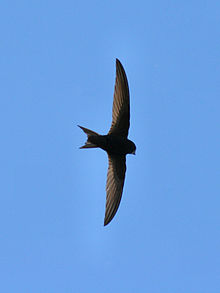
The swifts are a family, Apodidae, of highly aerial birds. They are superficially similar to swallows, but are actually not closely related to passerine species at all; swifts are in the separate order Apodiformes, which they share with hummingbirds. The treeswifts are closely related to the true swifts, but form a separate family, the Hemiprocnidae. The resemblances between swifts and swallows are due to convergent evolution, reflecting similar life styles based on catching insects in flight. The family scientific name comes from the Ancient Greek απους, apous, meaning "without feet", since swifts have very short legs and never settle voluntarily on the ground, clinging instead to vertical surfaces. The tradition of depicting swifts without feet continued into the Middle Ages, as seen in the heraldic martlet.

Swift

The swallows and martins are a group of passerine birds in the family Hirundinidae which are characterised by their adaptation to aerial feeding. Swallow is used colloquially in Europe as a synonym for the Barn Swallow. This family comprises two subfamilies: Pseudochelidoninae (the river martins of the genus Pseudochelidon) and Hirundininae (all other swallows and martins). Within the Old World, the name "martin" tends to be used for the squarer-tailed species, and the name "swallow" for the more fork-tailed species; however, there is no scientific distinction between these two groups. Within the New World, "martin" is reserved for members of the genus Progne. (These two systems are responsible for the Sand Martin being called "Bank Swallow" in the New World.) The entire family contains around 83 species in 19 genera. The swallows have a cosmopolitan distribution across the world and breed on all the continents except Antarctica. It is believed that this family originated in Africa as hole-nesters; Africa still has the greatest diversity of species.They also occur on a number of oceanic islands. A number of European and North American species are long-distance migrants; by contrast, the West and South African swallows are non-migratory. A few species of swallow and martin are threatened with extinction by human activities, although other species have benefited from human changes to the environment and live around humans.

Swallow

Nightjars are medium-sized nocturnal or crepuscular birds with long wings, short legs and very short bills. They are sometimes referred to as goatsuckers from the ancient folklore that they sucked milk from goats (the Latin for goatsucker is Caprimulgus). Some New World species are named as nighthawks. Nightjars usually nest on the ground. Nightjars are found around the world. They are mostly active in the late evening and early morning or at night, and feed predominantly on moths and other large flying insects. Most have small feet, of little use for walking, and long pointed wings. Their soft plumage is cryptically coloured to resemble bark or leaves. Some species, unusual for birds, perch along a branch, rather than across it. This helps to conceal them during the day. Bracken is their preferred habitat. The Common Poorwill, Phalaenoptilus nuttallii is unique as a bird that undergoes a form of hibernation, becoming torpid and with a much reduced body temperature for weeks or months, although other nightjars can enter a state of torpor for shorter periods. Nightjars lay one or two patterned eggs directly onto bare ground. It has been suggested that nightjars will move their eggs and chicks from the nesting site in the event of danger by carrying them in their mouths. This suggestion has been repeated many times in ornithology books, but while this may accidentally happen, surveys of nightjar research have found very little evidence to support this idea.

Nightjar

 From Wikipedia, the free encyclopedia

Orca Whales or Killer Whales type

The killer whale (Orcinus orca), also referred to as the orca whale or orca, and less commonly as the blackfish, is a toothed whale belonging to the oceanic dolphin family.

Type A looks like a "typical" killer whale, a large, black and white form with a medium-sized white eye patch, living in open water and feeding mostly on minke whales.

Type B is smaller than type A. It has a large white eye patch. Most of the dark parts of its body are medium gray instead of black, although it has a dark gray patch called a "dorsal cape" stretching back from its forehead to just behind its dorsal fin. The white areas are stained slightly yellow. It feeds mostly on seals.

Type C is the smallest type and lives in larger groups than the others. Its eye patch is distinctively slanted forwards, rather than parallel to the body axis. Like type B, it is primarily white and medium gray, with a dark gray dorsal cape and yellow-tinged patches. Its only observed prey is the Antarctic cod.

Type D was identified based on photographs of a 1955 mass stranding in New Zealand and six at-sea sightings since 2004. It is immediately recognizable by its extremely small white eye patch, shorter than usual dorsal fin, and bulbous head (similar to a pilot whale). Its geographic range appears to be circumglobal in subantarctic waters between latitudes 40°S and 60°S. And although nothing is known about the type D diet, it is suspected to include fish because groups have been photographed around longline vessels where they reportedly prey on Patagonian toothfish (Dissostichus eleginoides).

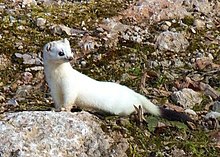
Weasel ☆☆☆

Cuteness overload for this little white handy Weasel on -Macabre duvet-. I think this is a story of a weasel in winter looking for its duvet. This BBC program, Frozen Planet reminds me when I was talking with friends about this weasel. I showed a picture and ask them, "You know what is it?".


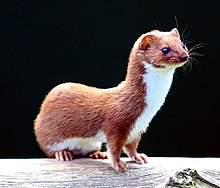
Weasel comes from the genus Mustela of the Mustelidae family. A small, active predators, with long and slender body plus short legs. Some species of weasel do molting in winter and covered in white fur.

The least weasel or Mustela nivalis is the smallest member of the Mustelidae and the cutest for me. Also there are stoat or ermine that's so similar with least weasel, but can be distinguished from it's larger size and prominent black tip of it's tail. Well I never think that it would be like that.

Yes, it's a predator and it can kill rabbit also that's bigger. T_T What a cruel little kid. Weasel is clever and can move so quickly with their body. They can follow their prey into the burrows fast. Weasel now considered as vermin cause of some cases where they took their prey form farms.

Oh, do you know? In some cultural meanings, weasel means bad lucks.


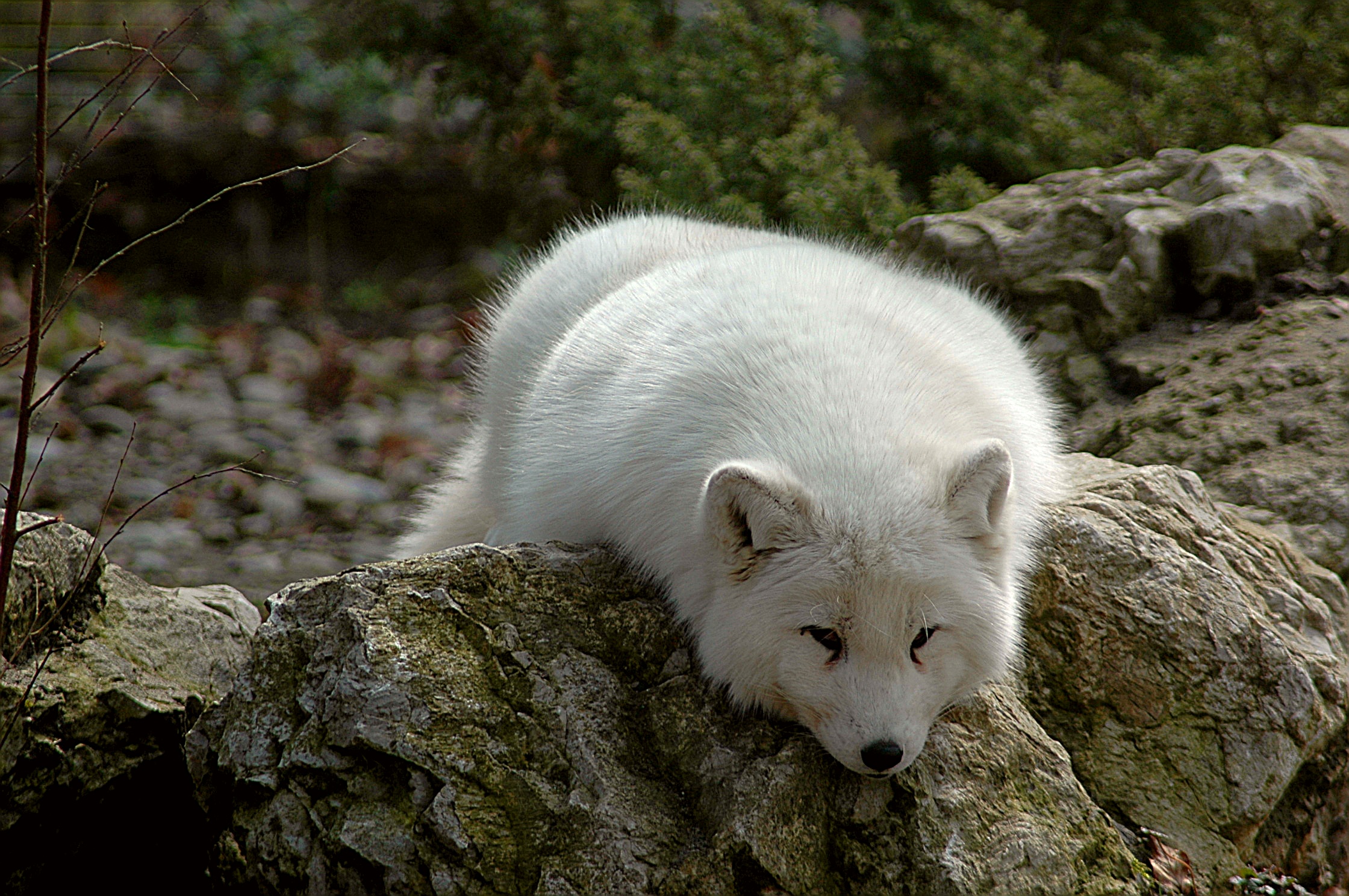
Arctic Fox ☆ ☆ ☆


Name: Arctic Fox (Vulpes lagopus)
Other names: white fox, polar fox or snow fox
Size: 85.3 cm (33.6 in) in length, males weigh 3.5 kg (7.7 lb), females weigh  2.9 kg (6.4 lb)
Food: lemmings, voles, ringed seal pups, fish, bird eggs, carrion, berries, and seaweed.
Population:  Arctic, including the outer edges of Greenland, Russia, Canada, Alaska, and Svalbard, Iceland and Scandinavia.

Do you know that Arctic Fox have seasonal furs that change color. It's brown in summer and white in winter. It have a very good hearing that help to catch their prey especially lemmings that live under the snow. They form monogamous pairs during the breeding season and usually stay together in family groups of multiple generations in complex underground dens.

I'm writing this after watching "Deadly 60" from BBC. Click here to watch: http://www.bbc.co.uk/nature/life/Arctic_Fox#p00btvxm. It got  ☆☆☆ three stars out of five from me. (T_T I don't really like it's summer furs).


information source: Wikipedia & BBC

Canidae ☆ The Dogs Family

Canidae

From Wikipedia, the free encyclopedia
The Canidae are the biological family of carnivorous and omnivorous mammals that includes domestic dogs, wolves, foxes, jackals, coyotes, and many other lesser known extant and extinct dog-like mammals. A member of this family is called a canid. The Canidae family is divided into two tribes: Canini (related to wolves) and Vulpini (related to foxes). The two species of the basal Caninae are more primitive and do not fit into either tribe.

Species and taxonomy
Dhole
African hunting dog
Short-eared dog
Maned wolf
Bush dog
Gray fox
Bat-eared fox
Raccoon dog

FAMILY CANIDAE (Extant and recently extinct species)

Subfamily Caninae


Characteristics
Wild canids are found on every continent except Antarctica, and inhabit a wide range of different habitats, including deserts, mountains, forests, and grasslands. They vary in size from the fennec fox at 24 cm (9.4 in) long, to the gray wolf, which may be up to 2 m (6.6 ft) long, and can weigh up to 80 kg (180 lb).
With the exceptions of the bush dog, raccoon dog, and some domestic breeds, canids have relatively long legs and lithe bodies, adapted for chasing prey. All canids are digitigrade, meaning they walk on their toes. They possess bushy tails, nonretractile claws, and, excepting the African wild dog (Lycaon pictus), a dewclaw on the front feet. They possess a baculum that, together with a cavernous body, helps to create a copulatory tie during mating, locking the animals together for up to an hour. Young canids are born blind, with their eyes opening a few weeks after birth. All living canids (Caninae) have a ligament analogous to the nuchal ligament of ungulates used to maintain the posture of the head and neck with little active muscle exertion; this ligament allows them to conserve energy while running long distances following scent trails with their nose to the ground. However, based on skeletal details of the neck, at least some Borophaginae (such as Aelurodon) are believed to have lacked this ligament. Only a few species are arboreal - the North American gray fox, the closely related Channel Island fox, and the raccoon dog habitually climb trees.
Social behavior
Almost all canids are social animals and live together in groups. In most foxes, and in many of the true dogs, a male and female pair work together to hunt and to raise their young. Gray wolves and some of the other larger canids live in larger groups called packs. African wild dogs have the largest packs, which can number as many as 90 animals. Some species form packs or live in small family groups depending on the circumstances, including the type of available food. In most species, some individuals live on their own. Within a canid pack, there is a system of dominance so that the strongest, most experienced animals lead the pack. In most cases, the dominant male and female are the only pack members to breed.
Canids communicate with each other by scent signals, by visual clues and gestures, and by vocalizations such as growls, barks, and howls. In most cases, groups have a home territory from which they drive out others. The territory is marked by leaving urine scent marks, which warn trespassing individuals.

Wobbegong

I'm curious after reading the news about 'wobbegong' eating shark at nationalgeographic.com. It's titled "Pictures: Shark Swallows Shark". Well, I thought like, "Wow really?" and yes it happens. But what makes me curious is the name of the shark, wobbegong. I look for it's information and here what I found.

Wobbegong or so called 'Carpet Sharks' is a species from the family Orectolobidae. They live in the sea floor of tropical waters and well camouflaged with a pattern which resembles the sea floor and looks like a carpet. The word wobbegong is believed to come from an Australian Aboriginal language, meaning "shaggy beard", referring to the growths around the mouth of the shark of the western Pacific.
There are 12 species total in this family. They found at western Pacific Ocean and eastern Indian Ocean, chiefly around Australia and Indonesia, although one species (the Japanese wobbegong, Orectolobus japonicus) occurs as far north as Japan. 

Genus Eucrossorhinus Regan, 1908
Eucrossorhinus dasypogon (Bleeker, 1867) (Tasselled wobbegong)

Genus Orectolobus Bonaparte, 1834
Orectolobus floridus Last & Chidlow, 2008 (Floral banded wobbegong)
Orectolobus halei Whitley, 1940.[6] (Gulf wobbegong or banded wobbegong)
Orectolobus hutchinsi Last, Chidlow & Compagno, 2006.[7] (Western wobbegong)
Orectolobus japonicus Regan, 1906 (Japanese wobbegong)
Orectolobus leptolineatus Last, Pogonoski & W. T. White, 2010 (Indonesian wobbegong)
Orectolobus maculatus (Bonnaterre, 1788) (Spotted wobbegong)
Orectolobus ornatus (De Vis, 1883) (Ornate wobbegong)
Orectolobus parvimaculatus Last & Chidlow, 2008 (Dwarf spotted wobbegong)
Orectolobus reticulatus Last, Pogonoski & W. T. White, 2008 (Network wobbegong)
Orectolobus wardi Whitley, 1939 (Northern wobbegong)

Genus Sutorectus Whitley, 1939
Sutorectus tentaculatus (W. K. H. Peters, 1864) (Cobbler wobbegong)

Wobbegongs are generally not dangerous to humans unless they are provoked. They have bitten people who accidentally step on them in shallow water; they may also bite scuba divers or snorkelers who poke or touch them, or who block their escape route. Wobbegongs are very flexible and can easily bite a hand that is holding on to their tail. They have many small but sharp teeth and their bite can be severe, even through a wetsuit; having once bitten, they have been known to hang on and can be very difficult to remove.
Although wobbegongs do not eat humans, humans frequently eat wobbegongs; the flesh of a wobbegong or other shark is called flake and it is often used in fish and chips in Australia. Wobbegong skin is also used to make leather.

Eucrossorhinus dasypogon (Tasselled wobbegong)
Orectolobus japonicus (Japanese wobbegong)
Orectolobus maculatus (Spotted wobbegong)
Orectolobus ornatus (Ornate wobbegong)

source: http://en.wikipedia.org/wiki/Wobbegong (edited)

Felidae ☆ The Cats Family

I love this cat family, especially the big cat. I dream of one day I go to wild life watching those big cat living. I took some picture with them on my birthday.. But they're so silent. I think of how poor they are, have to sit a long day. (not really, they got break time every hours) 
One day, I talked to my friends about the different between this big cat family. Which one is lion, tiger, jaguar, cheetah. And yes we confused, we're matching them by theirs skin pattern and else. 


☆ How may species do you know?

under this line is taken from Wikipedia (links to other pages of wikipedia includee here for more information)

Felidae is the biological family of the cats; a member of this family is called a felid. The most familiar felid is the domestic cat, which first became associated with humans about 10,000 years ago; but the family includes all other wild cats, including the big cats.
Extant felids belong to one of two subfamilies: Pantherinae (which includes the tiger, the lion, the jaguar, and the leopard), and Felinae (which includes the cougar, the cheetah, the lynxes, the ocelot, and the domestic cat).
The first felids emerged during the Oligocene, about 25 million years ago. In prehistoric times, a third subfamily, known as Machairodontinae, included the "saber-toothed cats", such as the well known Smilodon. Other superficially cat-like mammals, such as the marsupial sabertooth Thylacosmilus or the Nimravidae, are not included in Felidae despite superficial similarities.
Felids are the strictest carnivores of the 13 terrestrial families in the order Carnivora, although the three families of marine mammals comprising the superfamily Pinnipedia are as carnivorous as the felids.


Classification

Traditionally, five subfamilies have been distinguished within family Felidae based on phenotypical features: the Felinae, thePantherinae, the Acinonychinae (cheetahs), the extinct Machairodontinae, and the extinct Proailurinae.

Genetic classification

Genetic research has provided a basis for a more concise classification for the living members of the cat family based on genotypical groupings. Specifically, eight genetic lineages have been identified:
The last four lineages are more related to each other than to any of the first four, and so form a clade within the Felinae subfamily of family Felidae.

[edit]Extant species

The following is the complete list of genera within family Felidae, grouped according to the traditional phenotypical classification with the corresponding genotypical lineages indicated:

☆ It goes around the world...

Felids are obligate carnivores, requiring a diet of meat and organs to survive. Aside from the lion, wild felids are generally solitary; feral domestic cats do, however, form feral cat colonies. Cheetahs are also known to live and hunt in groups. Felids are generally secretive animals, are often nocturnal, and live in relatively inaccessible habitats. Around three-quarters of cat species live in forested terrain, and they are generally agile climbers. However, felids may be found in almost any environment, with some species being native to mountainous terrain or deserts.
Wild felids are native to every continent except Australasia and Antarctica.

(under this line, taken from: http://www.agarman.dial.pipex.com/main_ie.htm)

AFRICA:
African Golden Cat Profelis aurata  
African Wildcat - Felis sylvestris  
Black-footed Cat - Felis nigripes  
Caracal - Caracal caracal  
Cheetah - Acinonyx jubatus  
Leopard - Panthera pardus  
Lion  - Panthera leo
Sand Cat - Felis margarita  
Serval - Leprailarus serval

ASIA:
Asian Golden Cat - Catopuma Temmincki  
Bornean Bay Cat - Catopuma badia
Chinese Desert Cat - Felis bieti  
Clouded Leopard - Neofelis nebulosa
Fishing Cat - Prionailurus viverrinus  
Flat-headed Cat - Prionailurus planiceps
Iriomote Cat - Prionailurus iriomotensis
Jungle Cat - Felis chaus  
Leopard - Panthera pardus
Leopard Cat -  Prionailurus bengalensis  
Lion Panthera leo
Marbled Cat -  Pardofelis marmorata  
Pallas Cat - Otocolobus manul  
Rusty-spotted Cat - Prionailurus rubignosis  
Snow Leopard  - Uncia uncia
Tiger - Panthera tigris
Wildcat (Asiatic) - Felis silvestris

EUROPE:
Eurasian Lynx  - Lynx Lynx  
European Wildcat - Felis silvestris  
Jungle Cat - Felis chaus  
Leopard - Panthera pardus
Sand Cat - Felis margarita  
Spanish Lynx - Lynx pardinus

NORTH AMERICA:
Bobcat - Lynx rufus  
Cougar - Puma concolor  
Canadian Lynx - Lynx canadenis  
Jaguar - Panthera onca    
Jaguarundi - Herpailurus yaguarondi  
Ocelot - Leopardus pardalis

SOUTH AMERICA:
Andean Mountain Cat - Oreailurus jacobita
Cougar - Puma concolor  
Geoffroy's Cat  - Oncifelas geoffroyi  
Jaguar - Panthera onca  
Jaguarundi - Herpailurus yaguarondi  
Kodkod - Oncifelas guigna
Margay - Leopardus wiedi  
Ocelot - Leopardus pardalis  
Pampas Cat - Oncifelas colocolo  
Tiger Cat Leopardus tigrinus  

☆ Beauty Award

Most of them are similar to each other... can you distinguish them?

Ocelot
Caracal
Eurasian Lynx
Spanish Lynx
African Golden cat
Clouded Leopard
Serval
Snow Leopard
Tiger